


读心神探
China publishes world’s first comprehensive dictionary of ancient bamboo and silk manuscripts_我的网站

A |
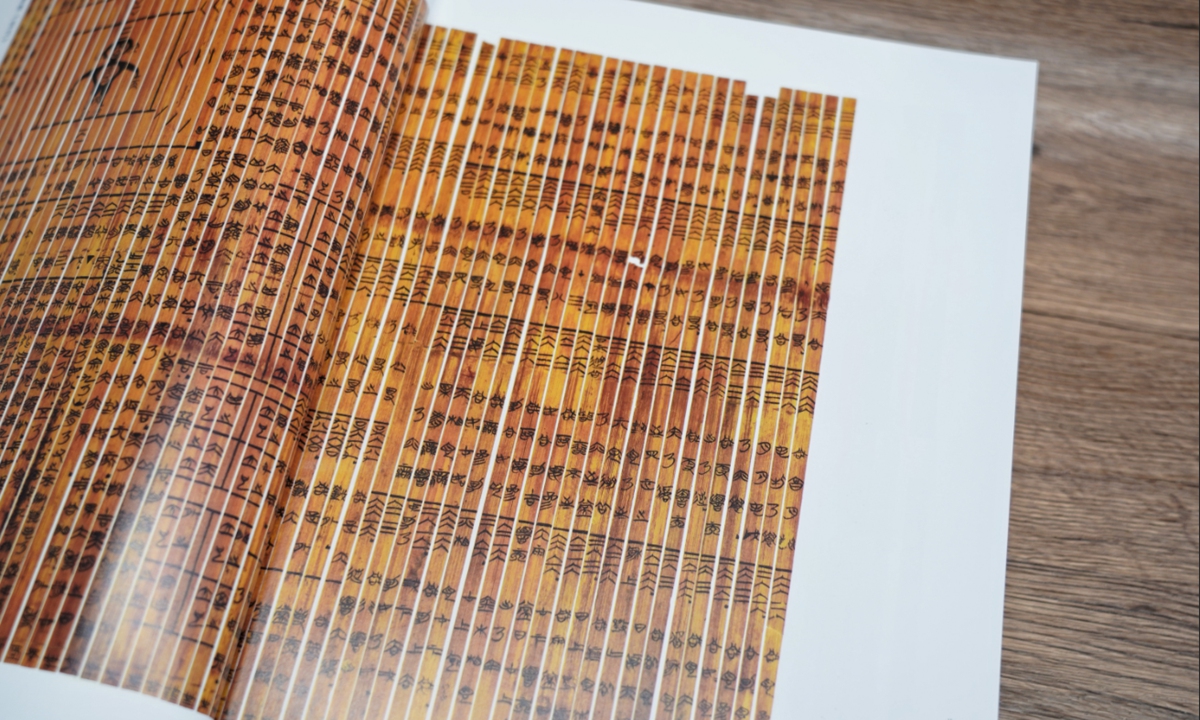
Published by the Shanghai Lexicographical Publishing House, the Dictionary of Bamboo and Silk Manuscript Studies is the world's first large-scale, authoritative lexicon to fully systematize global research on China's ancient bamboo slips, wooden tablets and silk manuscripts, the publishing house told the Global Times on Monday.
"Before paper was widely adopted, bamboo and wooden slips were China's most crucial carrier of writing, bearing the inheritance of Chinese civilization for thousands of years," Feng Shengjun, chief editor of the dictionary and vice president of the Chinese Society for the Study of Ancient Writing, told the Global Times.
"Major excavations of bamboo and silk relics have always been groundbreaking events in academic circles. By sorting out and interpreting these precious unearthed documents in a standardized dictionary form, we make the historical development of Chinese civilization clearer and more complete," Feng added, underscoring the book's foundational academic and cultural value.
The dictionary contains more than 9,000 entries and over 600 color illustrations and images. Entries cover the theory of bamboo and silk manuscript studies, excavated texts, manuscript forms and institutions, scholars and works, and preservation and research.
Before paper became widespread, bamboo and wooden slips, along with silk fabrics, were the principal writing materials in China. Originating in the early 20th century with the discovery of Dunhuang bamboo relics, the field has evolved into an internationally recognized scholarly frontier. It integrates archaeology, ancient history, legal systems, paleography, document conservation and multiple other sectors, fueled by successive landmark discoveries including the Shanghai Museum bamboo texts, Tsinghua University bamboo slips, Yuelu Academy Qin Dynasty (221BC-206BC) manuscripts and the famed Mawangdui silk documents, said the publishing house.
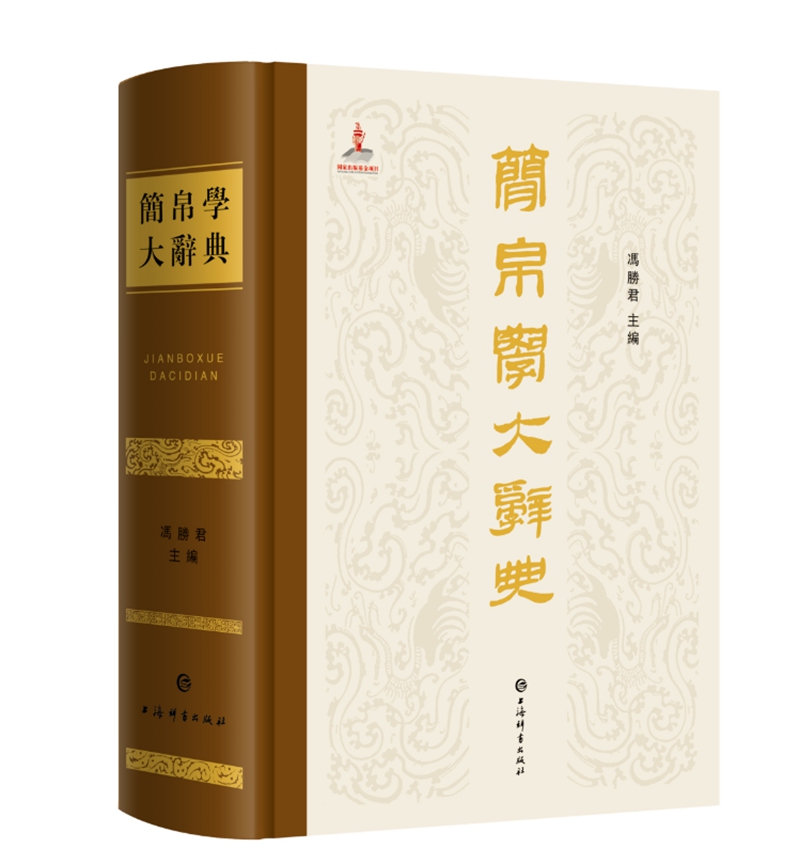
Zhao Hang, editor at the publishing house, told the Global Times that the volume comprehensively incorporates research achievements and academic works by Japanese and South Korean scholars, making it an important resource for foreign scholars who study bamboo and silk manuscripts.
It is intended for specialists, early-career researchers and general readers interested in early Chinese history. The entries range from theoretical concepts to biographies of leading scholars and descriptions of major excavation sites, with cross-references designed to help readers move across disciplines.
Feng said the volume will support research into the politics, laws, economics, military affairs, thought, science and technology, ethnic groups and social life of ancient China. It will also help standardize terminology across different scholarly traditions.
The publication is part of broader state-backed efforts to advance ancient script research and document the continuity of Chinese civilization. It aims to help make texts written more than 2,000 years ago "core material evidence" for interpreting a continuous 5,000-year Chinese civilization. For the field, it added, the dictionary is a landmark in a century of bamboo and silk manuscript studies.
。 Dhaka, Oct 11 (UNI) China wants to implement the Teesta master plan. Chinese Ambassador Li Ziming visited the Teesta Barrage and said this on Sunday.
On October 10, Ambassador Li Jiming called on Mr. Md. Sabirul Islam, Divisional Commissioner of Rangpur, and Mr. Md. Asif Ahasan, Deputy Commissioner of Rangpur District. Ambassador Li also met with local officials and engineers of Bangladesh Water Development Board.
China wants to lend a billion dollars to this project as a sponsor. China will implement the Teesta Master Plan through its people with loans. This project will include river mining, char mining, construction of satellite cities on both sides, solar power projects, naval terminals and many other things.
But experts say the project will be a white elephant with Chinese loan money. Bangladesh will get stuck in the net of Chinese debt. The way China trapped Sri Lanka, Pakistan in debt net.
International water expert, Lock Haven University professor Dr. Md. Khalekuzzaman has been calling this project ambitious and anti-nature since the beginning. He thinks that if this project is implemented, more terrible disaster will occur in the northern region including Tistapar.
Experts say, canceling the claim of fair share of Teesta river water with India, if this master plan is taken internally, India's unilateral control over Teesta will be recognized. India will no longer want to give water. It would be a suicidal decision.
China's debt trap on the other hand gives India control of the Teesta. A powerful syndicate wants to collect China's debt to Bangladesh. What could be the reason, everyone more or less knows what happens in projects in the name of river dredging.
Bangladeshi media personality Shankar Maitra told UNI, “This project needs more thought and research by the country's scientists and experts. One must also wonder why China has stepped up to give loans to the unprofitable sector. We also know what happens in the name of river mining, how corruption happens in the name of protecting dams”.
He said, "I think India must give its fair share of Teesta water to Bangladesh. This demand cannot be withdrawn".
Dhaka University Professor Major Nazmul Ahsan Kalimullah said, India is in great danger. The chicken neck in the Seven Sisters issue may be out of India's hands.
He said, "India has brought its own danger.
As a result of the tug of war between the Central Government of India and the provincial governments on the Teesta issue, Bangladesh has also withdrawn from the Teesta, while China has missed this opportunity. Bangladesh has waited for a long time.
He said, "We do not digest water?" Is our production stopped? Our hilsa fish production has collapsed? Certainly not.
UNI MAZ GNK。

B |
Current article:http://www.xuanliaruamibinmilangca.shop/list_r8ctf/005vi.html
Published on:04:44:40