
优酷
New book chronicles Guangdong’s millennium of trade, tracing China’s commercial spirit_我的网站

一 |

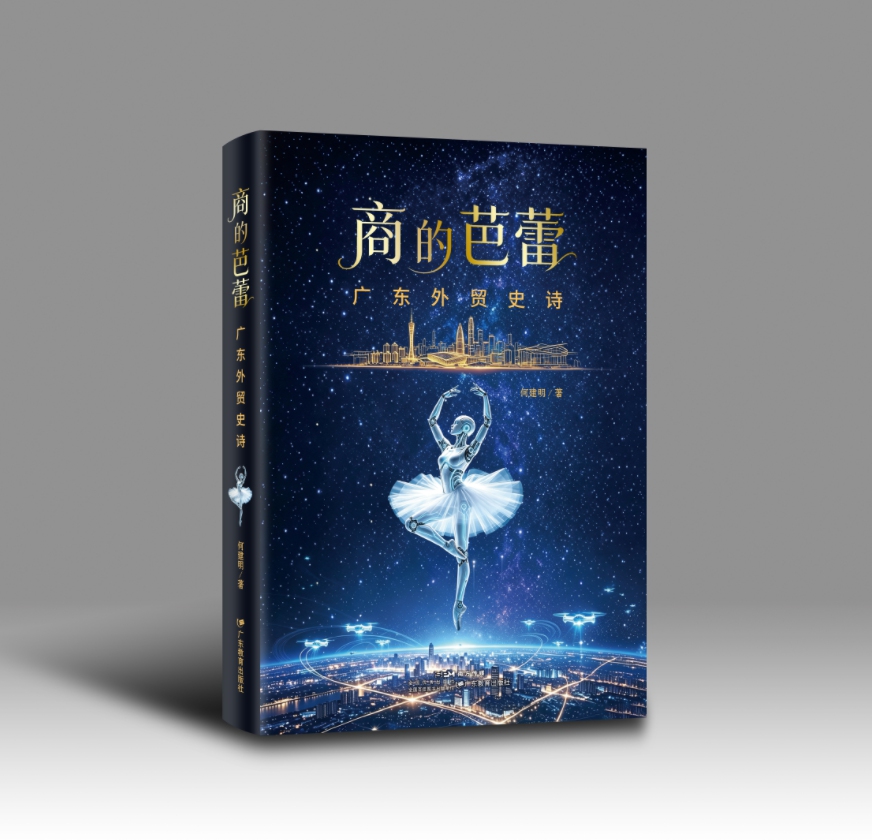
The monumental full length reportage Ballet of Commerce: The Epic of Guangdong's Foreign Trade by famous writer He Jianming is set to make its debut at the Southern China Book Fair from August 27 to 31 in Guangzhou, South China's Guangdong Province.
Published by the Guangdong Education Publishing House, the book is the first of its kind to offer a panoramic account of Guangdong's millennium of trade and will be presented as a special offering for 2026's APEC "China Year," Xu Xiaofeng, an editor with the publishing house, told the Global Times on Monday.
China will host the 33rd APEC Economic Leaders' Meeting in Shenzhen, Guangdong in November. It will be China's third time hosting the event, following Shanghai in 2001 and Beijing in 2014.
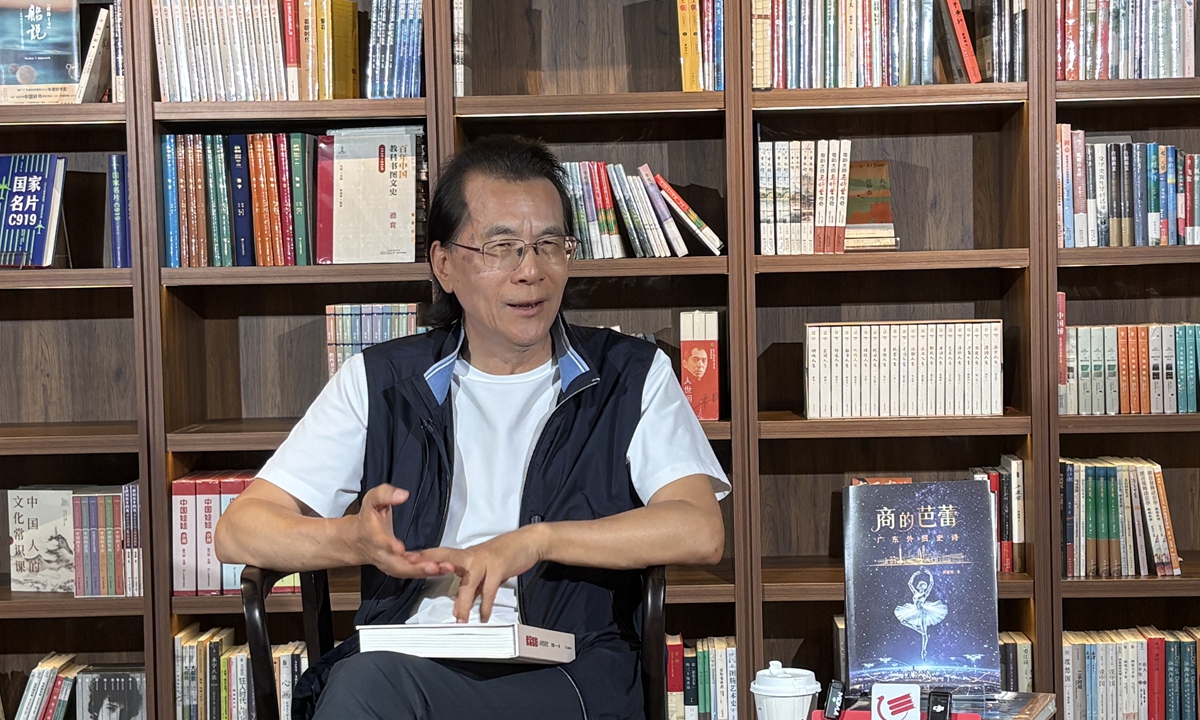
He, a former vice chairman of the China Writers Association and recipient of the Lifetime Achievement Award for Chinese Reportage Literature in 2023, told the Global Times on Monday that as the world watches the evolving trade relationship between China and the US, there is a growing need for a book that can help Western readers gain a deeper understanding of China's trading culture and how Chinese people have conducted business throughout history.
Guangdong marks the starting point of China's thousand-year maritime trade with the world. Through its foreign trade trajectory, the book reflects China's broader trade evolution, the enduring values of the Chinese spirit in the modern era, and the distinctive civilizational traits that have shaped China's rise, He noted.
Guangdong is both the birthplace of the ancient Maritime Silk Road and a pioneer of China's reform and opening-up. As a vital artery of commercial exchange between China and the rest of the world, the Maritime Silk Road has witnessed the evolution and transformation of the Chinese economy over the centuries.
During the Sui (581-618) and Tang (618-907) dynasties, silk was among the main goods transported along the route, earning it the name "Silk Road." During the Song (960-1279) and Yuan (1279-1368) dynasties, porcelain became a major export commodity, leading the route to be known as the "Porcelain Road." By the Ming (1368-1644) and Qing (1644-1911) dynasties, tea had emerged as a sought-after Chinese export in Europe, giving rise to yet another name - the "Tea Road," according to a report by the Counselor's Office of the Guangdong Provincial People's Government.
Mutual benefit
Guangdong, China's largest foreign trade province, accounts for about one-fifth of the country's total trade and imports. As a major manufacturing hub with deep and extensive industrial chains, it creates significant demand for production factors, the Xinhua News Agency reported.
In the first half of this year, Guangdong's foreign trade reached 5.49 trillion yuan ($810 billion), surpassing the 5-trillion-yuan mark for the first time in the same period on record. The figure represented a year-on-year increase of 20.8 percent and accounted for 21.6 percent of China's total foreign trade. The province contributed an additional 944.71 billion yuan in trade volume, accounting for 25.6 percent of the country's foreign trade growth, according to official statistics released in July.
Having interviewed over 100 enterprises and institutions, He said that the book revisits the enduring legacy of the Maritime Silk Road, highlighting the exchanges between China and the West and the fusion of diverse civilizations.
"At the heart of Chinese business culture is the belief that 'harmony is the most valuable.' Rooted in traditional Chinese culture, this philosophy emphasizes cooperation and mutual benefit. Rather than viewing strength as a means to overpower others, Chinese merchants have traditionally embraced the idea that prosperity should be shared. When one grows stronger, others can benefit and achieve success together. This aspect of Chinese commercial culture remains unfamiliar to many in the Western world," said the 70-year-old writer.
Wang Yuanlin, a professor at the School of Humanities Guangzhou University, told the Nanfang Plus (a Guangdong-based news platform) that mutually beneficial and fair foreign trade policies, together with Guangdong merchants' long-standing tradition of integrity and win-win cooperation, have been key factors behind the province's enduring success in foreign trade.
Elegant business
The author said that the choice of "ballet" in the book's title reflects the idea that Chinese business practices have developed into an art form - one characterized by balance and elegance.
"I want the Western world to understand that when the Industrial Revolution was just beginning and the Renaissance was sweeping across Europe, Chinese people had already mastered the art of commerce," He said.
Through conversations with entrepreneurs ranging from grassroots business founders to prominent corporate leaders such as Dong Mingzhu, chairperson of Gree Electric Appliances, He chronicles Guangdong's transformation from a millennia-old trading hub into a global industrial powerhouse.
"Just imagine: Employees at a private company can step into a space capsule after lunch and take a nap in their own private sleeping quarters. With a company like that, how could it not succeed?" he said.
From the exchange of handcrafted goods in the agricultural era to today's trade in high-tech products such as semiconductors and drones, Chinese people have developed a business culture centered on the principle that "harmony is most valuable" over thousands of years of commercial exchange.
This cultural tradition has become a key in driving the continued growth of trade in Guangdong and across China, He added.
。

二 |
原标题:分析师称,iPhone 14 的预购情况比 iPhone 13 Mini 更糟糕苹果上周宣布了 iPhone 14 系列。Apple 的新 iPhone 14 系列于上周亮相,预购将于 9 月 9 日开始,而iPhone 14将于 9 月 16 日发售。
。
三 | 但据苹果分析师 Ming-Chi Kuo称,iPhone 14 和 14 Plus 的预订量低于之前 iPhone 13 的预订量。“iPhone 14 和 14 Plus 将在发布当天有货,反映出需求低迷。就目前而言,iPhone 14 和 14 Plus 的预购结果比 iPhone SE 3 和 iPhone 13 mini 差,”郭在博客文章中写道周一。“iPhone 14 Plus 是 iPhone 13 mini 的替代品。然而,这款新品的预购结果明显低于预期,这意味着苹果今年针对标准机型的产品细分策略失败了。

四 | ”因此,分析师预测,iPhone 14 和 14 Plus 11 月的出货量预测可能会在几周内下调。

五 | 另一方面,iPhone 14 Pro 和 Pro Max超过四个星期的交货时间“可能反映了良好的需求”。

六 | iPhone 14 Pro 和 Pro Max的交货日期在预购开始后的几个小时内就滑到了 10 月。

七 | 苹果没有立即回应置评请求。

八 | 返回搜狐,查看更多责任编辑:
Current article:http://www.xuanliaruamibinmilangca.shop/llt5/tazf.html
Published on:20:06:20
栏目相关
- 优酷起诉惠珀一千万元,因为他散布“被收购”的谣言。
- 国家能源局:7月核发绿证3.06亿个,涉及可再生能源发电项目122.49万个
- 显卡市场已乱套!全新5090整机竟比显卡还便宜
- 石雄铁路完成首次桥梁转体施工
- 澳大利亚袋鼠再次杀人,上次是86年前_澳大利亚发生袋鼠杀人事件_肇事
- 福建南安:两岸共谒民族英雄郑成功
- 国家叫停价格战,用户买车会更贵还是更值?
- Shams:巴斯五兄妹统一立场 出手剩余湖人股权
- 网传《GTA6》“偷跑版”千万别下!113GB全是病毒
- 巴莱巴球探报告:迟到一年的重量级签约,曼联升级换代的加速键
- 柔玉柔派初学者:世界上第一部可折叠手机
- 中国多部门指导地方快速处置“白菜收购环节蘸取甲醛溶液”问题
热门排行
- 重庆:聚“新”于心,为青少年健康成长保驾护航
- 微软的新专利:表面拨号2或触摸支持
- 搭载M2芯片的新款iPad Pro国行售价6799起 最高支持2TB
- 新款比亚迪e9申报图曝光 纯电驱动 延续2024款汉DM-i外观
- 多部门“五进”宣传齐上阵
- 曼晚:曼联有意布莱顿左后卫卡迪奥卢,报价4000万至5000万英镑
- Digital Realty获50兆瓦额度,拟建在新加坡第四座数据中心
- 孔塞桑回应帅位传闻:有时感到缺乏尊重,我的未来就是明天
- 英菲尼迪纯电动SUV将展出,真正的汽车和内饰将提前在星空图书馆曝光。
- raksamart东京多ip服务器搭建注意事项
- 三天起租、升级指令,被明码标价的AI眼镜作弊服务
- 提升我国低空经济产业链韧性和自主可控水平