
吐槽
Pony.ai’s autonomous-driving distance tops 100m km as China scales up L4 commercialization_我的网站

一 | 本週五清早,WNBA常規賽將上演一場較量,由陽光主場迎戰夢想。夢想今季整體表現遠超陽光,即使是役作客出戰,夢想也有能力凱旋而歸。
雖然陽光上仗以3分的優勢險勝水星,但球隊的發揮其實並不是特別理想,其中正選五虎無一人得分上雙就是最好的證明,要不是後備上陣的艾莉亞愛華士和堅妮迪貝克分別貢獻14分和15分,陽光恐怕難以贏波。另外,上仗的勝利也僅僅是陽光今季的第8場勝仗,她們的賽季整體表現僅僅好過副班長暴風,而且該役之前球隊正遭遇五連敗打擊。值得一提的是,格蓮娜上仗終於傷癒復出,但她僅6投2中貢獻5分,這位將近36歲的老將早已不復當年之勇。陣容方面,莉根比亞絲和艾舒隆積遜因各種原因缺陣。
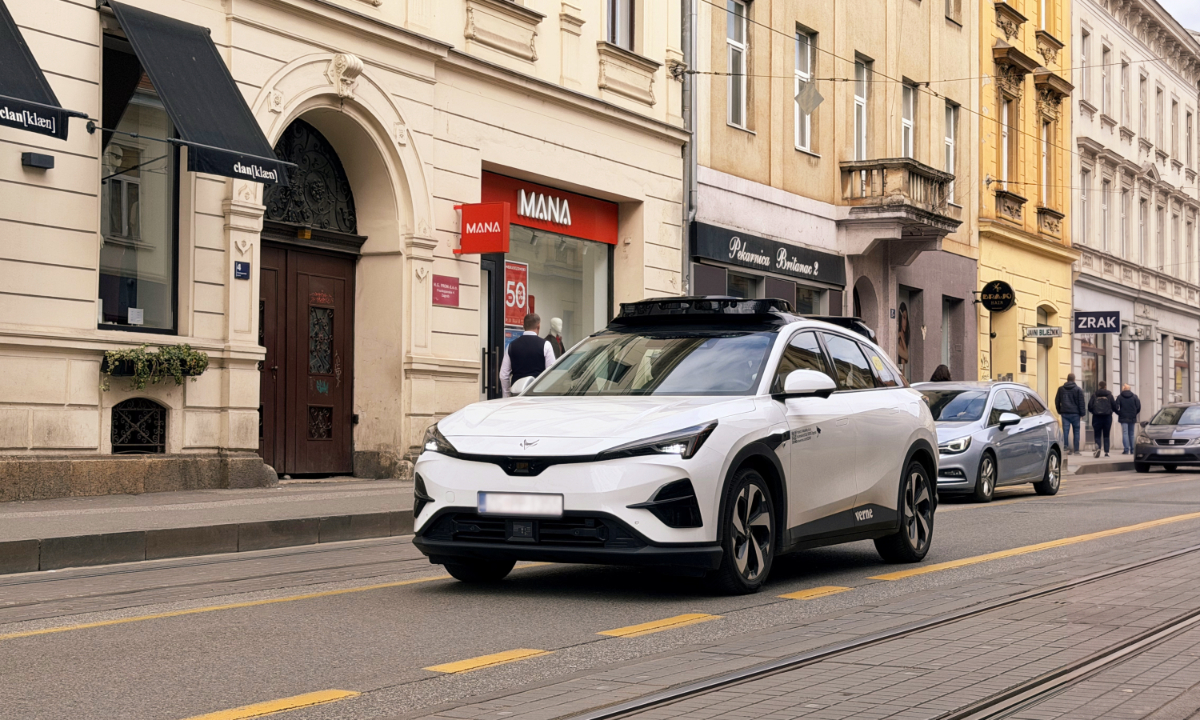
Chinese autonomous-driving company Pony.ai said on Monday that its cumulative autonomous-driving distance worldwide has surpassed 100 million kilometers, marking the latest milestone as China's driverless sector moves from technology validation toward mass production and scaled commercial deployment.
The milestone comes as L4 autonomous driving gains commercial traction across passenger transport and logistics in China, while Chinese companies are accelerating overseas deployment through partnerships with local operators in markets including Europe and Southeast Asia.
Industry experts said that the significance goes beyond rising distance. As commercialization gathers pace, the next phase of competition will increasingly hinge on whether autonomous-driving technology can be deployed at scale, brought down to commercially viable costs and replicated across different transport scenarios and markets.
At a recent media briefing, Pony.ai said that its fourth-generation L4 autonomous electric heavy-duty truck had entered mass production, with commercial operations expected to begin in the coming months. The company plans to deploy 500 to 1,000 trucks over the next two to three years across long-haul freight, bulk cargo transport and port logistics.
A notable part of that transition is the sharp decline in costs. Autonomous-driving hardware costs for Pony.ai's fourth-generation heavy truck are about 70 percent lower than for the previous generation, according to the company.
Similar cost reductions are also emerging in robotaxis. Pony.ai said on its official blog that the bill-of-materials cost of the autonomous-driving kit for its seventh-generation robotaxi has fallen 70 percent from the previous generation, helping the company achieve unit-economics breakeven in Guangzhou and Shenzhen, South China's Guangdong Province.
China's autonomous-driving sector is moving from technology validation to large-scale commercial deployment, underpinned by the rapid accumulation of real-world driving data, Pan Helin, a member of the Expert Committee for the Ministry of Industry and Information Technology, told the Global Times on Monday.
"Continuous road testing allows L4 systems to better adapt to local traffic conditions, laying the groundwork for wider commercial use," Pan said.
China has opened multiple cities to autonomous-driving applications, with commercialization gathering pace. As deployment expands and marginal technology costs fall, autonomous driving is expected to unlock significant commercial value and emerge as a new form of mobility, veteran industry analyst Liu Dingding told the Global Times.
Pony.ai aims to expand its robotaxi fleet to more than 3,000 vehicles by the end of 2026 and operate in 20 cities worldwide, with nearly half of those cities overseas. It also plans to develop an international version of its seventh-generation robotaxi tailored to different regulatory requirements and infrastructure, supporting the deployment of more than 1,000 vehicles in overseas markets.
Pony.ai's ambition also reflects a broader push by Chinese autonomous-driving companies to expand overseas.
On August 3, WeRide announced a partnership with Danish shared-mobility platform GreenMobility to deploy autonomous ride-hailing services in Denmark, marking its first entry into the Nordic region and sixth European market. Subject to regulatory approval, the service is expected to open to the public in the first half of 2027 using WeRide's latest GXR L4 robotaxi.
WeRide said on its website that its autonomous-driving products are now deployed in more than 40 cities across 12 countries. The company holds autonomous-driving permits in eight markets and operates a global L4 fleet of more than 3,000 vehicles.
A similar expansion is taking place in public transport. On July 17, Chinese autonomous-driving company MOGOX announced a strategic partnership with Singapore-based ComfortDelGro Bus. The two companies will cooperate on autonomous-vehicle deployment and operations, commercial expansion and coordination with regulators.
Pan said that China's autonomous-driving sector has two key advantages: a broad supplier base for major components and a large domestic market that allows companies to deploy services widely and accumulate real-world data. Advances in simulation and synthetic-data technologies have further strengthened the sector's ability to train and refine autonomous-driving systems.
Liu pointed to the cost benefits of scale. As deployment expands, the cost of key automotive-grade components such as lidar and chips continues to fall, improving the economics of commercial operations and creating more room for technological iteration, he said.
。
夢想今季整體表現值得稱讚,前32場常規賽過後,她們取得其中20場勝利,目前的勝率也達到62.5%。近況方面,上仗戰勝節奏後,夢想近9仗取得7勝2負的不俗戰績。球員方面,在上仗戰勝節奏一役中,包括正選五虎在內,全隊共6人得分上雙,其中連妮侯活、佐甸加拿大和安祖列絲三人均貢獻至少20分。

二 | 至於對賽方面,過去4次與陽光交鋒,夢想不但均是最後的贏家,而且單場至少贏16分、合計贏74分之多,可見雙方實力已經不在同一檔次。是役揮軍再戰陽光,夢想肯定值得看高一線。人員方面,迪希娜帕帕與I.艾華因各種原因缺陣。

三 |
Current article:http://www.xuanliaruamibinmilangca.shop/tb7/1j9yr.html
Published on:16:22:49


1
老和村农家书屋成为“黄金屋”2
长期喝甜饮料危害到底有多大 30年间关联死亡人数几乎翻倍3
失眠组已准备好《漫威金刚狼》发售后被骂!打是亲骂是爱4
盛色推出“G73Turbo”27 英寸显示器:QHD 275Hz / FHD 360Hz / HD 500Hz,1599 元5
499元的手机磁吸背屏:自拍党的救星还是二次元的玩具?6
神龟谢幕! 威少宣布退役 18载辉煌生涯画上句号7
全系标配倍适登EDC减震器 岚图FREE+将于6月底开启预售8
赵乐际会见约旦国王阿卜杜拉二世9
Windows7即将结束,微软高管期待着升级热潮来拯救个人电脑市场。10
【持仓龙虎榜】东证期货等多个头部机构集体加空红枣11
猛龙补强新思路:巴雷特可当作筹码升级内线轮换12
突发!直升机硬着陆,机上载有伊朗总统13
Joran van der Sloot expected to plead guilty in Natalee Holloway extortion case14
官方公告:Redmi Red Rice Note 7将通过系统升级升级到混合3超夜景模式15
多云+午后雷阵雨 天气重回夏日熟悉节奏 新台风可能已在酝酿
- 随机推荐
1
2024年北京义务教育阶段入学政策发布2
Mohanlal Celebrates The Grand Comeback of Kireedam in 4K at IFFI 20253
名记评最糟合同:恩比德吹杨莫兰特分列前三4
Epic CEO 吐槽微软 Ctrl+C 可靠性,让 99% 的 Win10/Win11 用户感到懊恼5
《生态保护“十五五”规划》印发6
还原“平常人”孔繁森7
微软发布紧急带外更新:修复SSL/TLS握手失败的问题8
布阿迪:我是真正的集体球员 我认为来到曼城是正确的事情9
市税务局“5·15政务公开日”主题宣传活动精彩纷呈10
美国飞机安全事件频发,5G 是背后黑手?11
37天两遇台风,记者再访友谊村——安置点人少了,重建房屋地基加高了12
自豪!我是雄安人 ② 杜泽文:铁军筑新城 他乡变故乡13
明起大转折!杭州强降雨进入尾声 部分地区仍需注意14
国家移民管理局:口岸出入境流量快速增长15
售价约24万元/限量55辆!铃木吉姆尼55周年纪念版在法国发布